How to Avoid Safari Wildlife Risks: A Definitive Safety Guide
To step into the African wilderness is to enter a complex, non-linear system where the human observer is neither the protagonist nor the primary concern of the inhabitants. The pursuit of wildlife viewing, particularly within the luxury and high-expedition tiers, necessitates a radical shift in spatial awareness and psychological posture. Safety in this context is not a static set of rules but a dynamic negotiation between human intent and animal instinct. The most significant dangers often stem not from the animals themselves, but from a fundamental breakdown in communication and a lack of respect for biological boundaries.
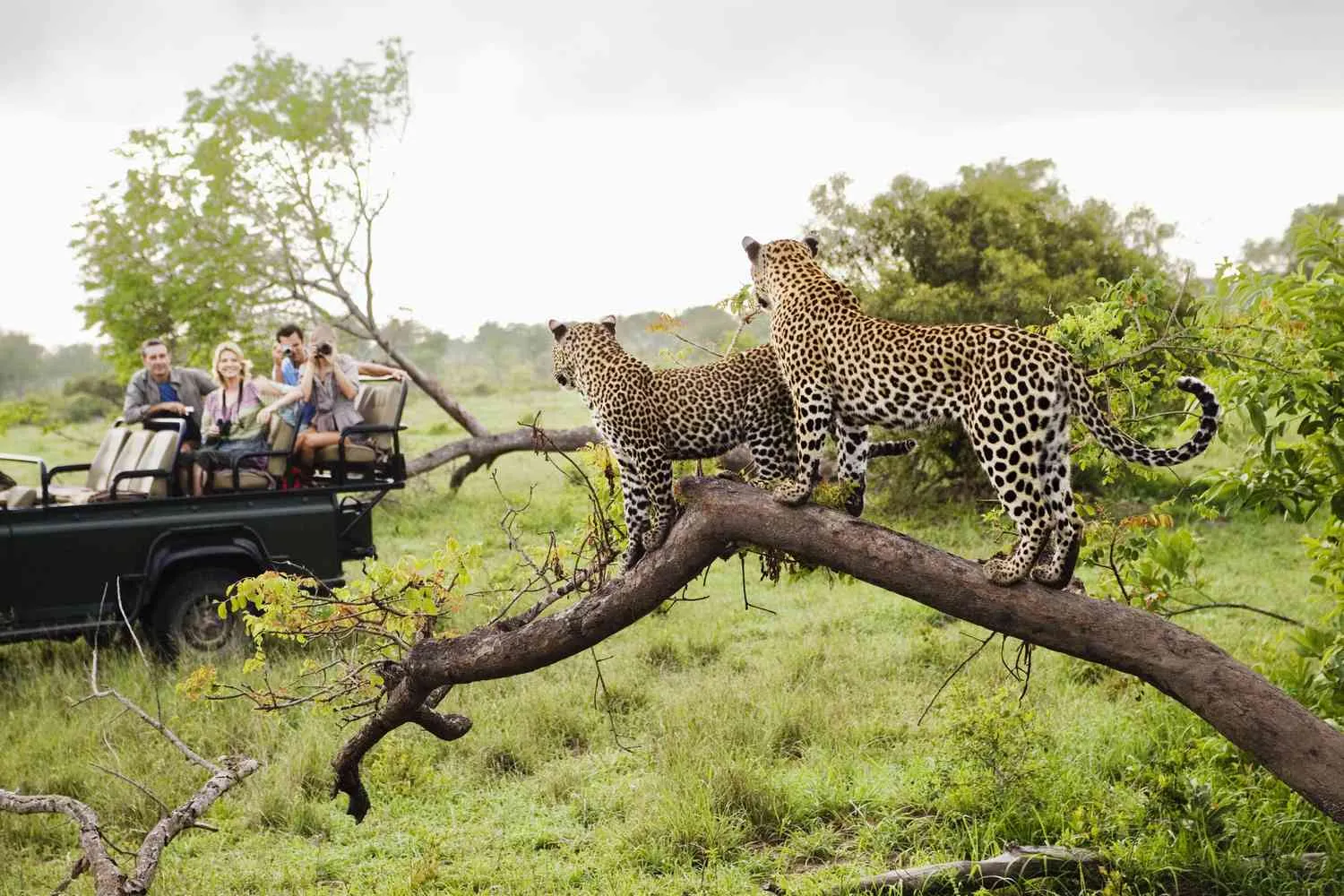
The logistical sophistication of modern safari travel—the climate-controlled vehicles, the gourmet meals, and the high-thread-count linens—can create a dangerous illusion of insulation. This “buffer of comfort” often lulls the traveler into a false sense of security, leading to the assumption that the wild has been tamed for their viewing pleasure. In reality, the thin canvas of a tent or the open side of a Land Cruiser offers only psychological protection; the physical reality remains one of raw, unpredictable nature where a lapse in judgment can have irrevocable consequences.
Addressing the complexities of modern expedition safety requires a departure from the “scare tactics” often found in sensationalist travel media. Instead, we must look at the systemic factors that govern animal behavior and human-wildlife conflict. This involves a rigorous examination of ethology, environmental cues, and the subtle “body language” of the bush. By interiorizing these signals, the traveler moves from a state of reactive anxiety to one of proactive stewardship, ensuring that the safari remains a transformative experience rather than a cautionary tale.
How to avoid safari wildlife risks
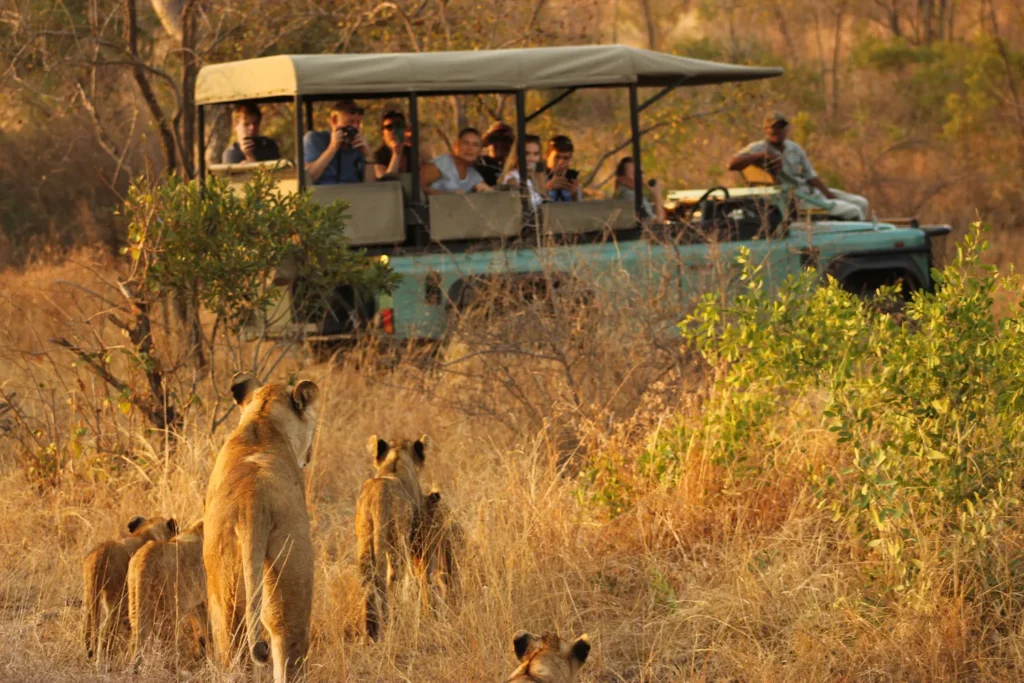
To understand how to avoid safari wildlife risks, one must first dismantle the anthropocentric view that animals are “aggressive” or “malicious.” In the vast majority of human-wildlife incidents, the animal is acting out of a perceived necessity for defense—either of its space, its offspring, or its food source. The risk is almost always a byproduct of a boundary being breached, often unknowingly, by the human observer.
A significant misunderstanding in this field is the reliance on “proximity” as the sole metric of safety. While distance is a critical factor, it is secondary to the quality of the interaction. A quiet, stationary observer at twenty yards may be safer than a loud, erratic group at fifty yards. When we discuss how to avoid safari wildlife risks, we are discussing the management of the human presence as a non-threatening stimulus. This involves controlling noise levels, sudden movements, and even the scent profiles we introduce into the environment.
The oversimplification of “rules” (e.g., “don’t get out of the car”) fails to account for the nuance of field conditions. A professional guide knows that “safe” is a sliding scale influenced by wind direction, the time of day, and the individual temperament of the animal in question. Real risk mitigation is, therefore,e an intellectual exercise in pattern recognition. It requires the traveler to move beyond being a passive spectator and become an active participant in the safety protocol of the expedition.
The Ethology of Encounter: Historical and Systemic Context
The relationship between safari travelers and wildlife has evolved from one of domination (the hunting era) to one of voyeurism (the early photographic era), and finally to one of integrated conservation. Historically, the “White Hunter” archetype managed risk through lethal force. Today, the modern guide manages risk through behavioral reading.
Systemically, the expansion of human-dominated landscapes has compressed wildlife into smaller corridors. This increased density means that animals in popular parks like the Serengeti or Kruger are more “habituated” to vehicles. However, habituation is not domestication. An animal that is “comfortable” around a vehicle is actually an animal that has incorporated the vehicle into its environment as a neutral, non-edible object. The moment a human breaks that silhouette—by standing up or stepping out—the neutrality is shattered, and the animal reverts to its primal categorization of the human as either a predator or a threat.
Mental Models for Wilderness Safety
To navigate the unpredictability of the bush, sophisticated travelers use several conceptual frameworks to maintain situational awareness.
The “Comfort Zone” Concentric Circles
Visualize the animal at the center of three circles:
-
The Neutral Zone: The animal is aware of you but continues its natural behavior (feeding, sleeping).
-
The Alert Zone: The animal stops its activity and stares. This is a warning that you are nearinyourts “flight flightght” threshold.
-
The Action Zone: The animal either flees or charges.
-
Limit: The size of these zones changes based on species, terrain, and whether the animal is injured or has young.
The “OODA Loop” for the Bush
Observe, Orient, Decide, Act. This military framework is used by lead guides to process a change in animal posture. If an elephant flaps its ears and shakes its head, the observer sees the movement, Orients to the fact that it is a “mock charge” signal, decides to remain still rather than flee, and Acts by calming the guests.
The “Silhouette Integrity” Model
This model posits that animals in habituated areas recognize the shape of the safari vehicle. As long as that shape remains consistent, the risk is low. The risk spikes exponentially when a human head or limb disrupts the “box” shape of the Land Cruiser, triggering the animal’s predatory or defensive instincts.
Taxonomy of Threats: From Micro to Macro
While the “Big Five” dominate the narrative of danger, the actual risk landscape is much broader.
| Category | Typical Species | Risk Mechanism | Mitigation Strategy |
| Mega-Herbivores | Elephant, Hippo, Rhino | Crushing, goring, and territorial defense | Maintain large buffers; respect water entries |
| Apex Predators | Lion, Leopard, Hyena | Predatory instinct (rare), defensive reaction | Never run; maintain eye contact (lion) |
| Venomous/Toxic | Black Mamba, Scorpions | Bites/Stings (accidental) | Wear closed shoes; check bedding/boots |
| Micro-Threats | Tsetse Fly, Mosquitoes | Disease transmission (Malaria, Sleeping Sickness) | Neutral-colored clothing; chemical barriers |
| Aquatic | Crocodile | Ambush predation | Stay 3+ meters from any water’s edge |
Operational Scenarios and Behavioral Dynamics
Understanding how to avoid safari wildlife risks requires analyzing specific field encounters where decision-making is critical.
Scenario A: The Surprise Encounter on Foot
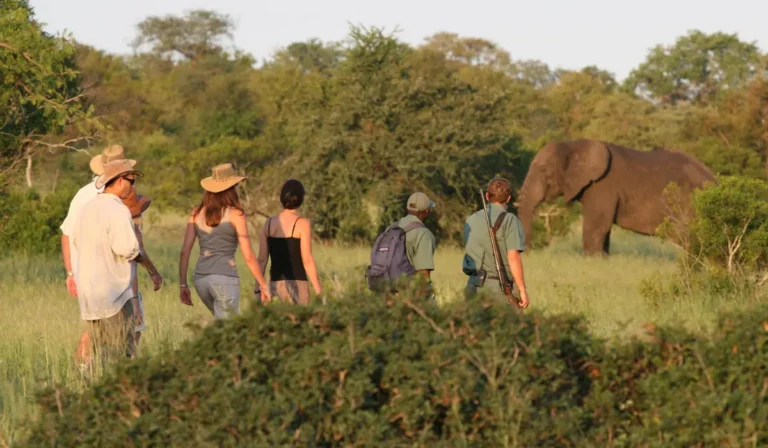
While walking to a remote hide, you round a bush and find a buffalo at fifteen yards.
-
Decision Point: The buffalo is an “adversarial” species; it does not flee as readily as an antelope.
-
Action: Do not run. Back away slowly and diagonally, keeping an eye on the animal without a hard, aggressive stare. Look for a “climbable” tree if the tail begins to twitch—a sign of impending movement.
-
Failure Mode: Running triggers the chase instinct in predators and the “trample” instinct in buffalo.
Scenario B: The Night-Time Camp Transit
You are walking from the dining tent to your sleeping quarters at a luxury, unfenced camp.
-
Decision Point: Darkness levels the playing field for nocturnal hunters.
-
Action: Always use a high-lumen torch to scan the “eyeshine” in the grass. Walk with an armed escort or a staff member. Never walk silently; a soft cough or the sound of footsteps alerts animals to your presence, so you don’t “startle” them.
-
Secondary Effect: Startled animals are the most dangerous.
The Economics of Safety: Direct and Indirect Costs
Safety is a resource-intensive endeavor. In the luxury safari tier, a significant portion of the “all-inclusive” price is allocated to risk management.
Direct Costs
These include the employment of “Lead Trails Guides” who hold advanced certifications (e.g., FGASA Level 3), the maintenance of high-caliber rifles (often .458 or .375 Magnums), and the premiums for satellite communication and medevac insurance.
| Component | Annual/Per-Trip Cost | Impact on Risk Profile |
| Lead Trails Guide | $40,000 – $70,000 (Salary) | Professional-grade behavioral reading |
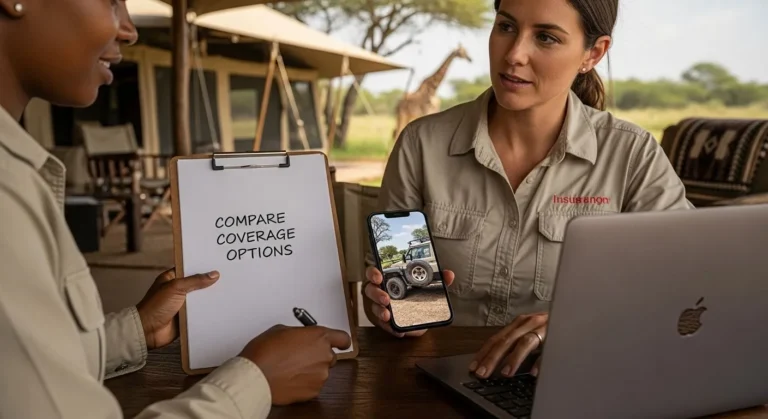
| Medevac Insurance | $200 – $500 (Per trip) | Rapid extraction in case of failure |
| Vehicle Maintenance | $5,000 (Per vehicle) | Prevents breakdowns in “hot” zones |
| Satellite Comms | $1,000 (Hardware) | Redundancy for emergency calls |
Opportunity Cost
The “cost” of safety is often a reduction in proximity. A guide who prioritizes your life over a “perfect photo” may refuse to drive closer to a pride of lions. The traveler must accept the trade-off between “visual intimacy” and “biological safety.”
Support Systems and Defensive Tools
The strategy for how to avoid safari wildlife risks is supported by a specific toolkit that balances non-lethal deterrents with emergency protocols.
-
Optics (Binoculars): Perhaps the best safety tool. High-quality 8×42 or 10×42 optics allow for “emotional intimacy” with the animal from a safe physical distance.
-
The “Bush Radio”: Encrypted VHF/UHF systems allow guides to share real-time safety data (e.g., “There is a cranky bull elephant on the North road”).
-
High-Lumen Lighting: Torches with 1000+ lumens can temporarily disorient a curious predator at night, providing a window for retreat.
-
Behavioral Signaling: Use of the vehicle’s engine (turning it off vs. revving it) to communicate intent to the animal.
-
Closed-Cell Footwear: Sturdy, puncture-resistant boots protect against the “small things that bite,” which cause statistically more injuries than lions.
Risk Landscape and Failure Modes
The “safari accident” is rarely the result of a single event; it is usually a chain of compounding errors.
-
The Fatigue Error: Toward the end of a ten-day trip, travelers become lax. They stop checking for scorpions in their shoes or start leaning out of the vehicle for photos.
-
The “Anthropomorphic” Error: Attributing human emotions (like “friendliness”) to an animal. A “smiling” hippo is actually yawning—a high-level threat display.
-
The Equipment Failure: A vehicle that stalls in the middle of a river crossing or a radio that dies during a walking safari.
Long-Term Adaptation and Field Governance
For those who travel to the bush frequently, safety becomes a matter of governance and maintenance. This involves:
-
Review Cycles: After every drive, professional guides conduct a “debrief.” What was the animal’s reaction to our presence? Did we push too close?
-
Lodge Monitoring: High-end lodges maintain “incident logs” to track the movements of potentially dangerous individuals (e.g., a “problem” leopard that has become too comfortable near the bar area).
-
Adjustment Triggers: If a drought occurs, animals become more desperate and territorial near water holes. The safety protocol must adjust to increase the “buffer zone” during these periods.
Evaluating Safety Performance and Leading Indicators
How does a traveler know if their outfitter is actually safe? You look for leading indicators rather than the absence of accidents (which can be luck).
-
Leading Indicator 1: Does the guide provide a comprehensive safety briefing before every activity?
-
Leading Indicator 2: Does the guide maintain “silence discipline” when approaching sensitive sightings?
-
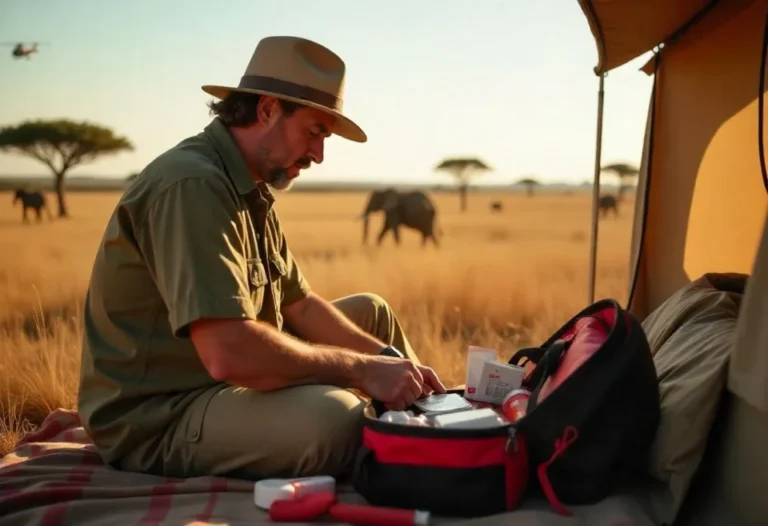
Leading Indicator 3: Does the vehicle carry a visible, well-maintained first aid kit and fire extinguisher?
-
Quantitative Signal: The guide’s years of experience in the specific biome you are visiting.
Common Misconceptions and Oversimplifications
-
Myth: “The animals are used to people.”
-
Correction: They are used to vehicles. They are not used to humans on foot, which they view as a weird, bipedal predator.
-
Myth: “You can outrun a hippo on land.”
-
Correction: A hippo can run 18-20 mph. Unless you are an Olympic sprinter on a track, you cannot outrun a hippo. The only defense is avoidance.
-
Myth: “Lions only hunt at night.”
-
Correction: Lions are opportunistic. If a human presents an easy target at 2:00 PM, they will take it.
-
Myth: “A rifle makes a walking safari safe.”
-
Correction: A rifle is a “security theater” for the guest and a tool of last resort for the guide. True safety is the guide’s ability to prevent the need to ever lift the rifle.
Conclusion: The Ethics of Awareness
Mastering how to avoid safari wildlife risks is ultimately an act of humility. It is the recognition that we are guests in a sovereign territory governed by ancient laws of survival. The most “luxurious” aspect of a safari is not the champagne or the plunge pool; it is the privilege of witnessing the raw mechanics of the natural world without disrupting them. By adopting a posture of extreme awareness and technical discipline, the traveler ensures that their presence leaves no mark on the landscape and that the wild remains exactly as it should be: powerful, unpredictable, and profoundly respected.