Best Luxury Safari for Multi-Generational Families: 2026 Guide
In the architecture of modern luxury travel, the multi-generational safari stands as one of the most complex logistical puzzles to solve. It requires a delicate calibration of disparate needs: the boundless kinetic energy of children, the desire for cultural and photographic depth in parents, and the pacing requirements or accessibility needs of grandparents. In 2026, the best luxury safari for multi-generational families is defined not by a single destination, but by a service infrastructure that allows a family to “breathe” together while operating on three different internal clocks.
The primary friction in these expeditions often arises from the “homogenized itinerary” trap, where an outfitter attempts to force all ages into a singular schedule. High-tier providers have pivoted away from this model, embracing “asynchronous luxury.” This philosophy recognizes that while the sunrise game drive is a staple of the African experience, it may not be suitable for a toddler or a senior recovering from a long-haul flight. The shift toward private villas and exclusive-use conservancies has transformed the safari from a rigid tour into a flexible residency.
Furthermore, the choice of geography has evolved beyond simple wildlife density. For a multi-generational group, factors such as “malaria-free” status, the presence of internal flight logistics (versus long dusty drives), and the availability of on-site medical support are as critical as the presence of the Big Five. This article serves as a systemic analysis of how to structure a legacy journey that honors the individual while celebrating the collective, ensuring that the wild serves as a bridge between generations rather than a source of exhaustion.
Best luxury safari for multi-generational families
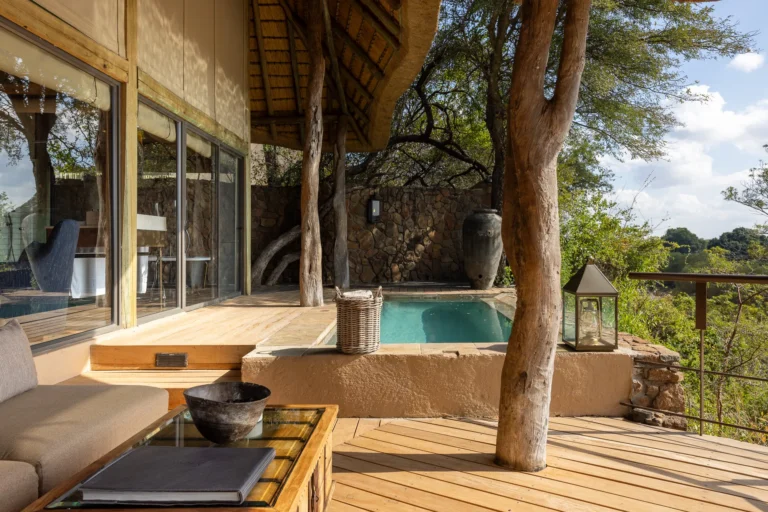
When identifying the best luxury safari for multi-generational families, the gold standard is the Private Safari House located within a Private Conservancy. Unlike a standard lodge where families are dispersed across separate suites and share vehicles with strangers, a private house (such as Singita Serengeti House or Royal Malewane’s Africa House) functions as a self-contained ecosystem. These properties provide a dedicated team—a private chef, butler, and field guide—allowing the family to dictate every facet of their schedule. If the grandparents wish to skip the morning drive for a leisurely breakfast on the deck, they can do so without depriving the teenagers of a high-octane predator track.
Geography also plays a decisive role in the “best” designation. For families with very young children or seniors with health concerns, South Africa’s malaria-free reserves (such as Madikwe or the Tswalu Kalahari) represent the apex of responsible luxury. These regions eliminate the medical anxiety of prophylactic medication while providing world-class wildlife viewing. Conversely, for families seeking a “classic” narrative, the Laikipia Plateau in Kenya offers a unique blend of conservation-led luxury where activities extend beyond the vehicle to include camel trekking, bush schools, and interactive community visits that engage younger minds far more effectively than a standard game drive.
Finally, the 2026 service model emphasizes “Junior Ranger” integration. The best family-centric lodges have moved past “babysitting” to “mentorship.” Guides at properties like Londolozi or &Beyond are trained specifically to translate complex ecological concepts into age-appropriate adventures. This ensures that the safari is not merely a passive observation for the children, but an active education in conservation, effectively planting the seeds for the family’s future philanthropic legacy.
The Systemic Evolution of the Family Expedition
The safari has transitioned from an exclusionary, adult-only pursuit into a multi-dimensional family event. Historically, many top-tier lodges maintained strict “no children under 12” policies to preserve an atmosphere of colonial-style quietude. However, a systemic shift in wealth transfer and travel habits has forced an architectural and operational redesign of the bush.
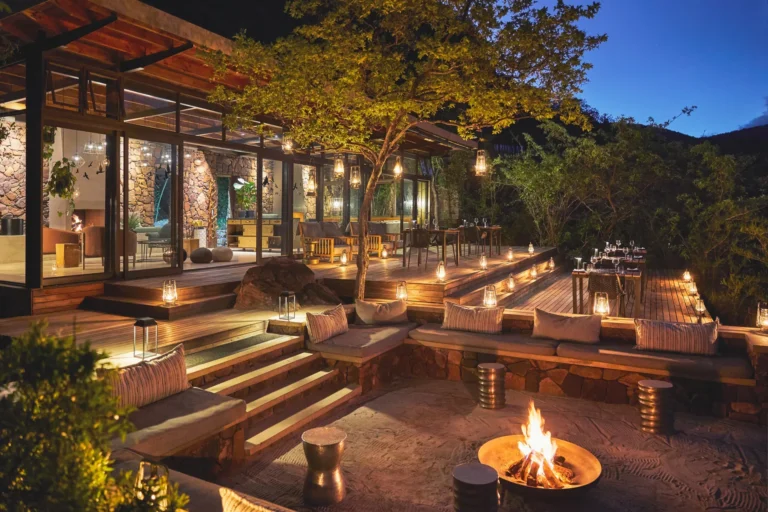
Lodges built in the last five years prioritize “communal-private” spaces—large central living areas linked to sprawling suites by raised walkways. This allows for a “connected yet separate” living arrangement. Operationally, the industry has adopted the “Flex-Staffing” model, where additional childminders or “bush buddies” are deployed to ensure that parents can enjoy a sunset cocktail or a bush walk with the peace of mind that the younger generation is safely engaged in a “micro-safari” around the camp.
Mental Models for Intergenerational Planning
To navigate the complexity of a 10-person, three-generation trip, planners should employ specific frameworks:
The “Energy Floor” Framework
Plan the itinerary around the person with the lowest stamina. If a grandmother can only handle two hours in a vehicle, that becomes the benchmark for the group’s “together” time. The “luxury” then provides a secondary vehicle for the high-energy members to continue their exploration.
The “Frictionless Transit” Logic
Every “transfer” (flight, boat, or drive) is a point of potential failure for a large family. The best plans minimize “hopper” flights and maximize time in a single, high-quality location. A “slow safari”—staying 6 nights in one incredible villa—is almost always superior to a “3+3” split for multi-gen groups.
The “Third-Space” Concept
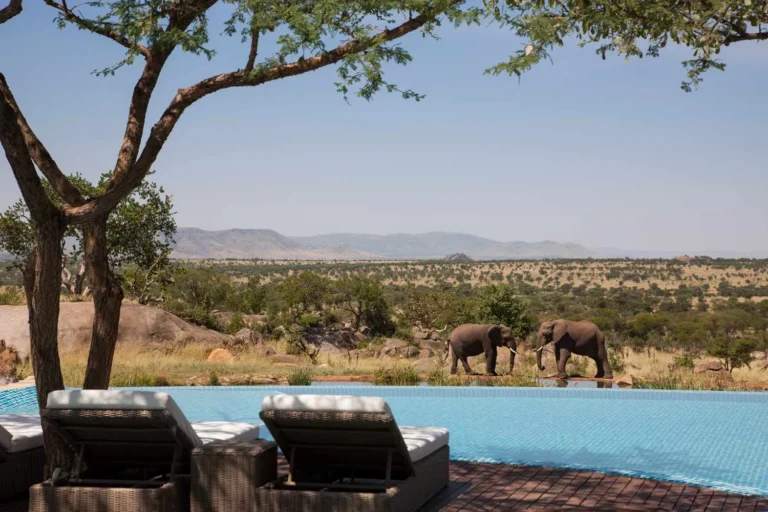
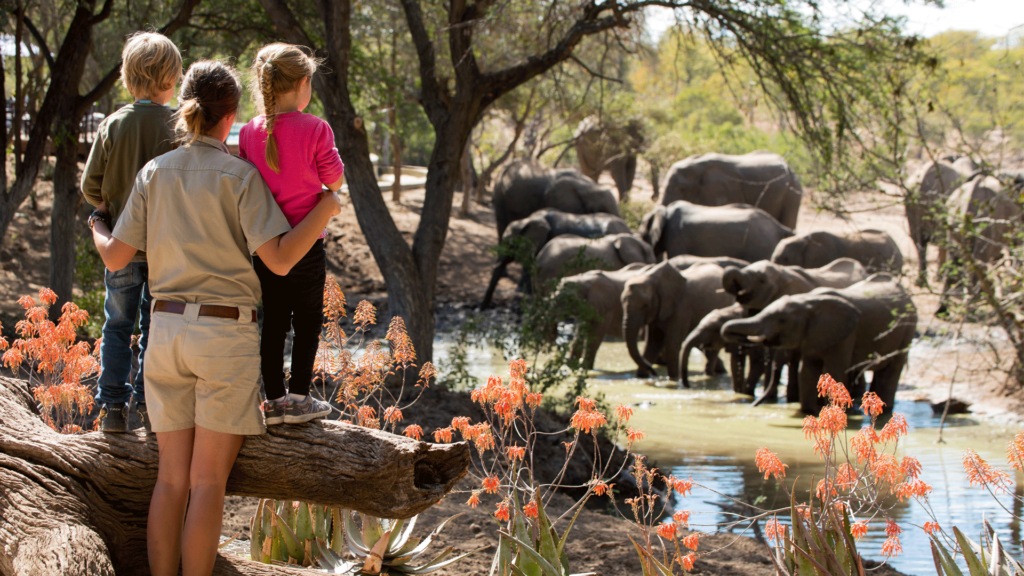
A successful family safari requires a “Third Space”—a place that is neither a bedroom nor a vehicle. This is usually the lodge’s interactive kitchen or a private watering hole hide. These spaces allow for “passive wildlife viewing,” where the animals come to the family while they relax together in a non-kinetic environment.
Key Categories of Family Safari Infrastructure
| Category | Typical Location | Benefit | Trade-off |
| Malaria-Free Private Reserve | Madikwe, South Africa | Total medical peace of mind; no age limits. | Can feel slightly less “wild” than open systems. |
| Private Conservancy House | Laikipia/Mara North, Kenya | Absolute schedule autonomy; dedicated staff. | Higher entry price point. |
| Water-Based Exclusive | Okavango Delta, Botswana | Relaxing boat/mokoro pace; great for seniors. | Limited walking options for kids; insect activity. |
| Semi-Arid Desert Luxe | Tswalu Kalahari, SA | Rare species (Pangolin); massive space. | Longer travel times to reach. |
| Integrated “Bush & Beach” | Kenya + Seychelles | Perfect “decompression” phase after safari. | Increased logistical complexity (flights/visas). |
Detailed Real-World Scenarios: Logistics in Action
Scenario A: The “Asynchronous” Morning
A family of 12 is staying at an exclusive-use house in the Timbavati.
-
The Constraint: The teenagers want to sleep in; the parents want to track leopards; the grandparents want to photograph birds.
-
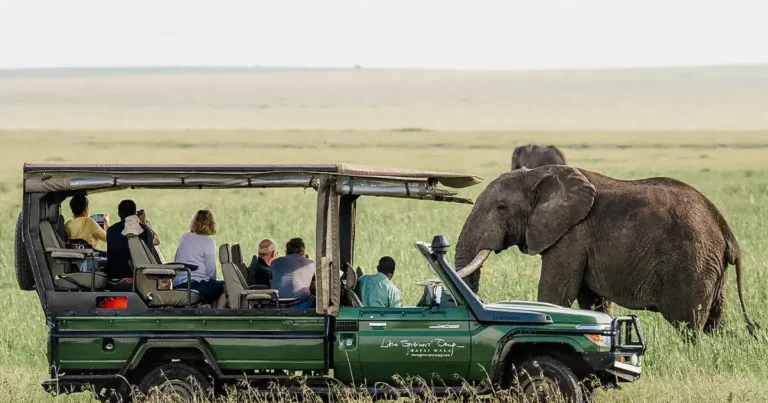
The Execution: Because the house has two dedicated vehicles, the “Predator Group” leaves at 5:30 AM. The “Birding Group” has a late breakfast and leaves at 8:30 AM. The teenagers join the Predator Group at a pre-arranged “bush brunch” location at 10:30 AM via a quick staff transfer.
-
The Result: Zero resentment; maximum satisfaction.
Scenario B: The Accessibility Pivot
A family patriarch uses a wheelchair but wishes to see the Great Migration.
-
The Solution: An outfitter selects a lodge in the Serengeti with “Grade A” accessibility (ramps, wide doors) and utilizes a modified vehicle with a mechanical seat-lift.
-
Failure Mode avoided: Choosing a “tented camp” with uneven dirt paths would have relegated the grandfather to his room for the duration of the trip.
Planning, Cost, and Resource Dynamics
The best luxury safari for multi-generational families is an investment in exclusivity. While “per person” rates are high, the value of the “Private House” model often becomes apparent when analyzing the total “Daily Operating Cost” of the family unit.
| Season | Multi-Gen Villa Rate (Daily) | Inclusions | Staff Ratio |
| Peak (June – Sept) | $12,000 – $25,000 | Private guide, chef, 2 vehicles, all drinks. | 2:1 (Staff to Guest) |
| Shoulder (May, Oct) | $8,000 – $15,000 | Same as peak, often includes spa credits. | 2:1 |
| Green (Nov – April) | $5,000 – $10,000 | Best for “Exclusive Use” deals. | 3:1 (due to lower occupancy) |
Support Systems: The “Invisible Staff” Layer
A legacy safari depends on three “unseen” support systems:
-
The Logistics Concierge: A dedicated person at the regional hub (Nairobi or Johannesburg) who manages the “lost luggage” or “delayed flight” friction before the family even knows it exists.
-
The Private Medical Link: Direct, 24/7 satellite link to flight doctors (AMREF) and on-site medical kits tailored for pediatric and geriatric emergencies.
-
The Culinary Adaptation Team: Chefs who can pivot from a six-course tasting menu for adults to a “bush-pizza” night for kids without compromising quality.
Risk Landscape: Compounding Friction Points
-
The “Immunization” Friction: Forgetting that some countries require Yellow Fever certificates for travelers coming from specific regions. For a family of 10, one missing yellow card can halt the entire trip.
-
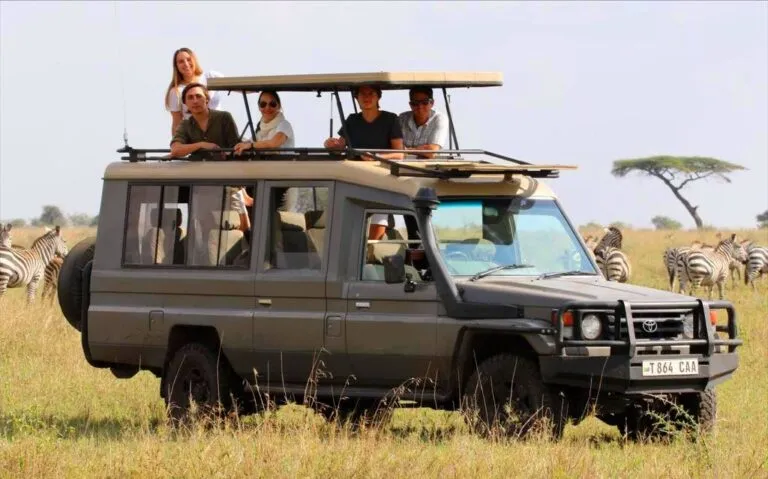
The “Vehicle Cram” Risk: Attempting to save money by putting 7 people in one vehicle. In the luxury tier, “personal space” is the primary commodity.
-
The “Internal Flight” Weight Limit: Luxury bush planes have strict luggage limits (usually 15kg/33lbs in soft bags). Failing to communicate this to a large family leads to a logistical nightmare at the airstrip.
Governance: The Family “Operating Manual”
To maintain harmony, high-end planners recommend a simple “Governance Checklist”:
-
The “Device-Free” Window: Agree on a 3-hour window daily (usually during the evening sundowner) where all screens are put away.
-
The “Opt-Out” Grace: Establish that “opting out” of an activity is a valid choice, not a slight against the group.
-
The Review Cycle: A 10-minute “family huddle” with the lead guide every evening to adjust the next day’s start times.
Measurement: Evaluating Success Beyond the Sightings
The “ROI” of a multi-generational safari is measured by leading and lagging indicators:
-
Qualitative Signal: The amount of “inter-generational storytelling” happening around the fire.
-
Quantitative Signal: The “Shared Sighting Percentage”—how many hours the group spent together without conflict or exhaustion.
-
Documentation: The creation of a professional-grade family “Expedition Book” provided by the lodge’s on-site photographic studio.
Common Misconceptions and Industry Fallacies
-
Myth: “You have to see the Big Five every day.”
-
Correction: For kids, seeing a dung beetle or a chameleon is often more engaging than a sleeping lion.
-
Myth: “Africa is too dangerous for toddlers.”
-
Correction: In a private conservancy with a dedicated tracker, the environment is far more controlled and safer than a crowded city.
-
Myth: “Grandparents will be bored if they don’t go on every drive.”
-
Correction: Modern lodges are designed as “sanctuaries” for reading, birding, and wellness; the “lodge-only” day is often the highlight for seniors.
Conclusion: The Legacy of Shared Wonder
The best luxury safari for multi-generational families is ultimately a triumph of design over circumstance. By acknowledging the inherent tensions of traveling with mixed ages and solving them through private infrastructure and flexible guiding, a family creates a shared “language of the wild.” In a world of digital fragmentation, the African savannah remains one of the few places where a 7-year-old and a 70-year-old can stand in equal awe of the same horizon. The luxury is not the gold on the taps; it is the silence that allows the family to finally hear each other.